

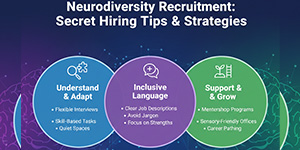
Neurodiversity Recruitment: Secret Hiring Tips & Strategies
In today’s rapidly evolving workforce, companies are beginning to recognize that embracing bold cognitive differences is more than a social responsibility it’s a major competitive advantage. This is why Neurodiversity recruitment has become a powerful movement within modern HR and talent acquisition. Instead of seeing neurological differences like autism, ADHD, dyslexia, dyspraxia, Tourette syndrome or other cognitive differences as problems, modern companies hire people with these conditions because they see them as special strengths.
Among these strengths are the ability to recognize patterns, stay deeply focused, and come up with creative solutions to problems. Other strengths are the ability to remember things and look at material in different ways that often work better than more common ways of thinking. As innovation speeds up, companies that use neurodiverse hiring practices get a smarter, more creative workforce that can look at difficult problems from a variety of perspectives.
However, despite growing awareness, many companies still struggle to build frameworks that support effective Inclusive recruitment strategies for Neurodivergent candidates. Job descriptions, interviews and other parts of the hiring process often favor neurotypical speaking styles without meaning to. For example, interviews that need quick answers may be hard for people who have sensory issues or take a long time to think, even if they would be great at the job. Here is where companies need to think again about how they hire people and make processes based on Neurodiversity in the workplace rather than forcing candidates to fit into rigid hiring molds.
This article provides a complete, step-by-step breakdown of Cognitive diversity recruitment, revealing insider strategies and lesser-known hiring techniques used by global leaders in neurodiversity inclusion. You will learn powerful frameworks and scalable Neurodiversity hiring best practices, including how to transform job postings, interviews and working settings to help individuals with neurological disorders do successfully. We will also explore practical examples, use cases, and actionable strategies for how to recruit neurodiverse employees effectively, from talent sourcing to onboarding.
Understanding Neurodiversity Recruitment & Why It Matters
Neurodiversity recruitment is more than a hiring trend it is a strategic initiative focused on recognizing and embracing neurological differences as natural variations of the human mind. This method doesn't see conditions like autism spectrum disorder, ADHD, dyslexia, or dyspraxia as problems. Instead, it views them as special strengths that can help people do better at work. As companies keep adding more types of people to their workforces, Neurodiverse hiring plays a critical role in building teams that are both innovative and resilient.
Traditional ways of hiring often focus on social cues, body language or ways of talking that are better for people who aren't neurodivergent. However, these elements rarely reflect actual job capability. This is why embracing Inclusive recruitment strategies ensures that companies evaluate individuals based on genuine skills, not outdated hiring norms. With thoughtful processes, businesses can create a smoother pathway for Neurodivergent candidates, giving them a chance to show off their skills in a friendlier setting.
Companies embracing Neurodiversity in the workplace see measurable improvements across innovation, productivity, and employee loyalty. People who are neurodivergent often do very well in jobs that require a lot of focus on details, strategic thought, creative problem-solving, and exact analysis. Microsoft, SAP, JPMorgan and other tech companies have shared evidence that neurodivergent workers do a better job than neurotypical ones in specific roles like data analysis, software engineering, and cybersecurity.
This makes Cognitive diversity recruitment not just a moral or social initiative, but a business-driven priority. When a team consists of diverse cognitive styles logical thinkers, visual learners, abstract creators and the general decision-making process gets better and more balanced when analysts are hyper-focused. Teams find mistakes more quickly, come up with more ideas and predict problems more accurately. Because people look at problems in very different ways, this kind of variety helps new ideas grow.
Why Neurodiversity Matters in Modern Business
A workforce built through Neurodiversity recruitment supports:
- Better product design because of different ways of thought
- Better at figuring things out
- More creative
- Greater teamwork because of balanced cognitive skills
- Improved capacity for the company to adapt
Also, neurodivergent workers are more likely to stay at jobs where they feel supported. As a result, people leave less often, it costs less to hire people and the team works together better. As companies struggle with talent shortages and skill gaps, Neurodiversity hiring best practices help tap into an underutilized talent pool filled with highly capable individuals who are often overlooked due to traditional hiring biases.
Examples & Use Cases
Example 1: A cybersecurity firm adopts Inclusive recruitment strategies and redesigns its interview process to reduce verbal pressure. A person with autism does an amazing job in a hands-on hacking test, finding weaknesses faster than anyone else who has applied. The company hires him and later finds out that he is the best expert on the team.
Example 2: A marketing company implements Strategies to attract neurodiverse talent by allowing candidates to submit portfolio-based applications rather than traditional resumes. A dyslexic applicant is hired as a creative designer after turning in a strong visual storytelling resume. Within months, she comes up with unique marketing ideas that make clients more interested.
These real-world use cases demonstrate the great potential unlocked through how to recruit neurodiverse employees effectively. When companies move away from strict rules and instead allow for flexibility and help in the hiring process, they are able to find and hire great candidates.
Barriers in Traditional Hiring & How Inclusive Recruitment Strategies Fix Them
Even the most well-meaning ways of hiring people often have hidden problems that screen out very capable Neurodivergent candidates. To build successful Neurodiversity recruitment pipelines, before companies can use proven methods to change the way they do things, they need to first know what is stopping them. Inclusive recruitment strategies. This section breaks down the core challenges and demonstrates how organizations can transform their hiring model into one that embraces Neurodiversity in the workplace and supports long-term inclusion.
1. Barrier: Job Descriptions That Overemphasize Soft Skills
Many job ads say that "strong interpersonal confidence," "excellent communication skills," or "the ability to multitask under pressure" are needed, even when they aren't. People who are neurodivergent might take statements like these seriously or think they aren't good at the job even though they can do it.
Inclusive Fix: Creating Inclusive Job Postings for Neurodivergent Candidates
By developing creating inclusive job postings for neurodivergent candidates, businesses can significantly expand their talent pool. This entails:
- Listing only the most crucial tasks
- Using language that is straightforward and uncomplicated
- Steering clear of unnecessary social constraints
- Declaring that they are at ease with various forms of communication ("We welcome different communication styles").
When organizations implement these changes, they get more job applications from people with an assortment of cognitive abilities, strengthening their Cognitive diversity recruitment efforts.
2. Barrier: Interview Formats That Prioritize Social Performance Over Skills
Standard interviews look at things that have nothing to do with getting the job, like eye contact, quick answers, social cues or how people shake hands. This is not good for neurodivergent people who might have trouble talking to other people or understanding what they see.
Inclusive Fix: Structured Assessments & Skills-Based Interviews
Transitioning the evaluation process toward skills rather than style supports Neurodiverse hiring. Effective alternatives include:
- Letting people write or do things by hand
- Offering people homework
- Giving people questions ahead of time
- Having candidates bring notes
- Creating sensory-friendly spaces
These modifications align with Neurodiverse candidate interview tips and techniques, giving each applicant a fair chance to demonstrate capability.
3. Barrier: Fast-Paced Work Simulations
Some job tests require people to solve problems right away while they are short on time. This method leaves out great candidates who only need more time to think about things or different sensory circumstances.
Inclusive Fix: Flexible Testing Conditions
Companies can modify assessments by:
- Removing unnecessary timers
- Allowing noise-cancelling headphones
- Offering offline assessments instead of live exams
- Letting candidates choose a comfortable format
This creates a more equitable environment aligned with Neurodiversity hiring best practices.
4. Barrier: Unclear Expectations
Many Neurodivergent candidates struggle when job responsibilities or performance expectations are vague. This often leads them to avoid roles where the demands aren't clearly defined.
Inclusive Fix: Clear, Predictable Hiring Steps
Clearly defined dates for the interviews companies can facilitate a more seamless hiring process by being transparent about the duration of interviews:
- Written expectations; detailed hiring procedures and clear details on the administration of tests
- Giving this information improves and eases the process for all applicants, not just neurodivergent ones.
5. Barrier: Recruiter Bias (Often Unconscious)
Recruiters may misinterpret behaviors such as lack of eye contact, monotone speaking, or fidgeting viewing them as signs of disinterest or poor social ability. This can disqualify strong candidates before they even get a chance to show their expertise.
Inclusive Fix: Recruiter & Hiring Manager Training
Training staff on Neurodiversity in the workplace dramatically reduces bias. Effective training modules include:
- Understanding neurodivergent communication styles
- Recognizing strengths across neurological profiles
- Avoiding assumptions based on behavior
- Applying competency-based hiring structures
This fosters a stronger foundation for how to recruit neurodiverse employees effectively.
Example 1: Tech Startup Eliminates Bias
A tech company found that a lot of people with ADHD and autism were failing their interviews because they couldn't make small talk. The company hired 12 neurodivergent developers after changing to skill-based interviews and giving the questions ahead of time; four of these developers later became top workers.
Example 2: Logistics Company Improves Hiring Accuracy
A logistics company implemented Strategies to attract neurodiverse talent by offering applicants the option to complete warehouse simulations at their own pace. A candidate with dyspraxia showed exceptional pattern recognition skills when given additional processing time and became a key member of the optimization team.
How to Recruit Neurodiverse Employees Effectively — A Complete Step-by-Step Framework
To successfully hire neurodiverse candidates, companies must use a fully structured framework that supports neurodivergent talent at every stage of the hiring process, from the first touchpoint to final onboarding. This part describes a thorough, fact-based method for how to recruit neurodiverse employees effectively, making sure that companies create a welcoming and flexible hiring system that is meant to find, evaluate and keep highly qualified neurodivergent workers.
This framework integrates the principles of Neurodiverse hiring, Inclusive recruitment strategies, and Cognitive diversity recruitment, while embedding specific adjustments that help organizations align with Neurodiversity hiring best practices.
Step 1: Build Awareness & Commitment Internally
The foundation of strong Neurodiversity recruitment begins with internal alignment. HR teams, hiring managers and others need to know about the needs, skills and communication styles of neurodivergent job seekers.
What this includes: Conduct training sessions on Neurodiversity in the workplace, educate leaders on bias-free communication, share real-world success stories, Clarify legal obligations and accommodation requirements.
Internal alignment makes sure that everyone who is hired uses the same inclusive words, standards and ways of judging people.
Step 2: Redesign Job Descriptions
Before you even begin recruiting, you must create inclusive job postings for neurodivergent candidates that feel safe, clear and welcoming.
What to change: Remove socially biased wording (“strong social confidence,” “excellent verbal communication”) Use bullet points for clarity, highlight essential skills only, Mention accommodations openly, Clarify work expectations and daily responsibilities.
This is one of the most effective Strategies to attract neurodiverse talent because it breaks down the first major barrier: unclear or overwhelming job descriptions.
Step 3: Adjust Application Processes
Neurodivergent people often do better when they are not faced with hurdles that don't need to be there. What you can give: Clear and simple application forms, portfolio filing options, formats that work with text-to-speech and options other than long personality tests.
These adjustments can dramatically increase your pool of applicants by making the process more accessible and aligned with Cognitive diversity recruitment goals.
Step 4: Prepare Candidates for Interviews
One of the best-performing techniques in how to recruit neurodiverse employees effectively is providing interview transparency.
Best practices: Send interview questions in advance, Explain the structure and expected duration, offer sensory-friendly meeting rooms, allow time for breaks if needed.
This approach also aligns with Neurodiverse candidate interview tips and techniques, giving candidates the tools, they need to succeed.
Step 5: Use assessments that are based on skills
Instead of seeing how well a candidate gets along with others, managers should pay attention to how well they can do the job. These are some recommended ways to test people: Technical work samples, practical problem-solving projects, take-home assignments and tests that are written or visual. These methods reduce bias and highlight the candidate’s real strengths, supporting the core goals of Neurodiversity hiring best practices.
Step 6: Allow different ways to do the interview
Neurodivergent people often miss out on jobs because of rigid interview formats. Being able to adapt is very important. Some good choices are written interviews, videos with answers given later, portfolio demos and hands-on tryouts. This flexibility communicates that your company supports Neurodiversity in the workplace, enhancing trust and performance.
Step 7: Collaborate with Neurodiversity Organizations
To strengthen your Neurodiversity recruitment outreach, partner with organizations specializing in neurodivergent employment training.
Step 8: Provide Supportive Onboarding
It's not enough to just hire neurodivergent workers. To be successful in the long run, you need to have a structured onboarding method that is made for their needs. This includes clear written directions, visual workflows, frequent meetings, assigned mentors and workspace choices that are friendly to people with sensory issues.
Example 1: Data Analytics Firm Boosts Innovation
A data analytics company uses this step-by-step model to improve their Neurodiversity recruitment results. By shifting to portfolio reviews and written interviews, they identify a dyslexic candidate with extraordinary analytical visualization skills. He becomes instrumental in creating dashboards that improve client insights.
Example 2: Customer Service Center Enhances Performance
A customer service company struggling with turnover integrates these Strategies to attract neurodiverse talent. They create sensory-friendly call stations and allow written interview formats. They later hire four autistic employees who show exceptional consistency, accuracy and reduced error rates boosting performance across the team.
Creating Inclusive Workplace Environments for Neurodivergent Hires
An effective Neurodiversity recruitment strategy doesn’t end when the candidate is hired. Inclusion should stay a part of how people talk to each other, how bosses act, and how people work every day. A lot of companies are good at hiring neurodivergent people but bad at keeping them because the workplace is too confusing, overwhelming, or strict. This is why creating an inclusive workplace is the backbone of Neurodiversity in the workplace, ensuring long-term productivity, comfort and retention.
A workplace built to support Neurodiverse hiring is not drastically different from a traditional one it is simply more thoughtful, predictable and flexible. These changes benefit every employee, not only Neurodivergent candidates. When people know what they're supposed to do, when and how they can talk to each other and when they can see what's going on, teams are less worried and more organized.
How people talk to each other is another important thing to think about. A lot of neurodivergent workers do well when they get clear, straight and structured communication. Leaders shouldn't give unclear directions. They should not do that. Instead, they should show how to do things in a clear, step-by-step way. Making a diagram or workflow plan or writing a summary after a meeting can help a lot with understanding. These methods are very similar to the best ways to hire neurodiverse people. They make sure that workers know what is expected of them without adding extra stress.
Support tools are also very important. Peer buddies, mentorship programs, or planned check-ins help workers feel like they know what they're doing instead of feeling stressed. Businesses should not just assume that everyone can adjust by themselves. They should offer to help. This ensures that how to recruit neurodiverse employees effectively extends seamlessly into how to retain them effectively.
Openness is another strong tool. Predictable tasks, clear due dates and set schedules can help lower stress, especially for workers who need order to do their best. These inclusive adjustments become natural extensions of Inclusive recruitment strategies, continuing the supportive tone set during the hiring process.
Examples & Use Cases
Example 1: Finance Firm Enhances Productivity Through Sensory-Friendly Workspaces
A finance company noticed that several analysts hired through their Neurodiversity recruitment initiative were having a hard time in a busy open office. After focus rooms were built and noise-cancelling tools were allowed, people became much more productive. One autistic analyst even turned out to be the best in the area at finding mistakes and being accurate.
Example 2: Creative Agency Strengthens Collaboration with Clear Communication Systems
A creative company hired a graphic artist with ADHD who often missed small details in spoken directions. Rather than punishing him, the team moved to written notes and visual task boards. This adjustment aligned perfectly with Neurodiversity hiring best practices, allowing the designer to excel and take on high-profile client projects.
Conclusion
Neurodiversity recruitment is a strategic advantage for organizations seeking innovation and resilience. By using neurodiverse hiring, businesses get more applicants and find special thinking skills that normal hiring doesn't see. Using inclusive hiring methods, businesses can find and hiring neurodivergent people who have the right skills. These people can help the business with all kinds of issues, come up with creative ways to get things done and do a great job.
Success requires designing every stage of hiring and workplace experience with inclusion in mind. From creating inclusive job postings for neurodivergent candidates to applying Neurodiverse candidate interview tips and techniques, organizations make sure that people are judged on their skills and not on how well they fit in with the group. To support neurodiversity in the workplace, neurodivergent workers should be able to show off their skills with skills-based tests, adaptable job interviews, and chances to talk openly with coworkers.
Workplace environment and culture are equally critical. Companies practicing Cognitive diversity recruitment by offering predictable workflows, clear instructions, mentorship and sensory-friendly spaces empower neurodivergent employees to perform at their best. These adjustments not only benefit Neurodiverse hires but enhance collaboration, retention and overall team performance.
The business impact is clear: organizations that adopt Neurodiversity hiring best practices see improved productivity, creativity and loyalty. Strategies to attract neurodiverse talent and keep them by using inclusive methods; this will build stronger teams and a spirit of innovation. Real-world examples, like tech companies making jobs easier for autistic workers and creative firms using visual workflows, show that these methods work.
In short, how to recruit neurodiverse employees effectively is more than a hiring initiative it's a long-term bet that companies will become smarter, more inclusive and better prepared for the future. By making neurodiverse hiring a normal part of their culture, companies get talent that hasn't been used before, encourage different ways of thinking and build strong teams that do well.
Read More: Recruitment Storytelling Techniques for Hiring Success