

Employee Experience (EX) Explained: Benefits & Tips
Employee experience has become one of the most important factors influencing workplace success. In today's competitive business environment, organizations no longer focus only on salaries and benefits. They also invest in creating positive experiences throughout an employee's journey—from recruitment and onboarding to career development and offboarding.
A great employee experience (EX) helps companies attract top talent, improve productivity, increase employee satisfaction, and reduce turnover. Businesses that prioritize employee well-being often outperform competitors because happy employees tend to deliver better customer experiences and stronger business results.
In this comprehensive guide, you'll learn employee experience explained, why it matters, its key benefits, practical strategies, and how organizations can continuously enhance the workplace.
What Is Employee Experience (EX)?
What is employee experience (EX)? Employee experience (EX) refers to every interaction an employee has with an organization throughout their employment lifecycle. It includes the physical workplace, company culture, leadership, technology, communication, career development, and employee well-being.
Unlike traditional HR practices that focus on individual policies, employee experience considers the complete journey from the employee's perspective.
The employee journey typically includes:
- Recruitment
- Interview process
- Hiring
- Onboarding
- Daily work
- Performance management
- Learning and development
- Career growth
- Recognition
- Employee wellness
- Exit process
When each stage is thoughtfully designed, employees are more likely to stay engaged and motivated.
Employee Experience Explained
Simply put, employee experience explained means understanding how employees feel about working for an organization every day.
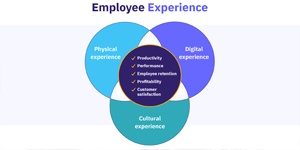
It involves three major environments:
1. Physical Environment
This includes:
- Office design
- Workspace comfort
- Safety
- Equipment
- Remote work setup
A comfortable workplace helps employees stay productive and healthy.
2. Digital Environment
Modern employees depend on technology.
Examples include:
- HR software
- Collaboration tools
- Project management systems
- Communication platforms
- IT support
Poor technology often causes frustration and reduces efficiency.
3. Cultural Environment
Culture shapes how employees interact with leaders and colleagues.
It includes:
- Leadership style
- Company values
- Teamwork
- Inclusion
- Recognition
- Trust
- Transparency
A positive culture creates stronger relationships and higher motivation.
Why Is Employee Experience Important?
Many HR professionals ask, Why is employee experience important?
The answer is simple: employee experience directly affects business success.
Companies with strong EX often enjoy:
- Higher employee satisfaction
- Better customer service
- Increased innovation
- Improved productivity
- Lower absenteeism
- Higher retention
- Stronger employer branding
Employees who feel valued are more willing to contribute ideas, solve problems, and collaborate effectively.
Employee Engagement vs Employee Experience
Many people confuse employee engagement vs employee experience, but they are different.
|
Employee Experience |
Employee Engagement |
|
Entire employee journey |
Emotional commitment to work |
|
Includes workplace, technology, leadership, culture |
Measures motivation and enthusiasm |
|
Focuses on employee interactions |
Focuses on employee attitude |
|
Long-term strategy |
Result of good experiences |
|
HR and leadership responsibility |
Shared responsibility |
Think of employee experience as the foundation, while employee engagement is one of its outcomes.
Excellent employee experiences naturally lead to stronger engagement.
Benefits of Employee Experience
Organizations investing in employee experience (EX) often experience measurable improvements.
1. Higher Employee Satisfaction
Satisfied employees enjoy their work environment and feel appreciated.
Benefits include:
- Better morale
- Positive workplace atmosphere
- Increased loyalty
2. Better Employee Retention
Replacing employees is expensive.
Improving employee experience helps companies reduce turnover by creating an environment where employees want to stay.
3. Increased Productivity
Employees work more efficiently when they have:
- Clear goals
- Good leadership
- Reliable technology
- Supportive colleagues
Positive experiences reduce distractions and frustration.
4. Improved Customer Experience
Happy employees usually provide better customer service.
Satisfied employees:
- Respond faster
- Solve problems effectively
- Build stronger customer relationships
This creates happier customers.
5. Stronger Employer Brand
Companies known for excellent employee experiences attract talented job seekers.
Positive employer reviews improve recruitment efforts.
6. Better Innovation
Employees who feel psychologically safe are more likely to:
- Share ideas
- Experiment
- Collaborate
- Solve business challenges
Innovation thrives in supportive workplaces.
7. Reduced Absenteeism
Employees experiencing lower stress and better well-being take fewer unnecessary absences.
Healthy workplaces improve attendance.
8. Higher Business Performance
Research consistently shows that organizations with positive employee experiences often achieve:
- Higher profitability
- Better customer satisfaction
- Faster growth
- Stronger financial performance
The Employee Experience Lifecycle
Every stage contributes to overall employee satisfaction.
Attraction
Potential employees first encounter:
- Company website
- Social media
- Employer reviews
- Job advertisements
A strong employer brand creates positive first impressions.
Recruitment
Candidates appreciate:
- Clear communication
- Fair interviews
- Quick feedback
- Transparent hiring
The recruitment process sets expectations for future employment.
Onboarding
Successful onboarding helps new employees:
- Understand company culture
- Learn responsibilities
- Meet colleagues
- Become productive faster
Good onboarding increases confidence.
Development
Employees want opportunities to:
- Learn new skills
- Attend training
- Receive coaching
- Advance careers
Career development significantly improves employee satisfaction.
Performance Management
Modern performance management emphasizes:
- Continuous feedback
- Goal setting
- Coaching
- Recognition
Employees perform better when expectations are clear.
Retention
Companies retain employees through:
- Fair compensation
- Flexible work
- Growth opportunities
- Recognition
- Positive leadership
Retention begins long before employees consider leaving.
Offboarding
Even departing employees deserve positive experiences.
Professional offboarding includes:
- Exit interviews
- Knowledge transfer
- Respectful communication
- Alumni relationships
Former employees may become future customers or even return later.
Employee Experience Strategy
Every successful organization needs an effective employee experience strategy.
A comprehensive strategy usually includes several core elements.
Understand Employee Needs
Collect employee feedback through:
- Surveys
- Interviews
- Focus groups
- One-on-one meetings
Listening is the first step toward improvement.
Build a Positive Culture
Culture should encourage:
- Respect
- Inclusion
- Collaboration
- Trust
- Accountability
Employees thrive in supportive environments.
Invest in Leadership
Managers influence daily employee experiences more than anyone else.
Train leaders to:
- Communicate clearly
- Provide coaching
- Recognize achievements
- Resolve conflicts fairly
Strong leadership creates stronger teams.
Improve Workplace Technology
Employees expect technology that helps rather than hinders.
Organizations should invest in:
- Fast computers
- Modern software
- Cloud collaboration
- Mobile accessibility
- Reliable IT support
Efficient technology reduces frustration.
Prioritize Employee Well-Being
Employee wellness includes:
- Mental health
- Physical health
- Financial wellness
- Flexible schedules
- Work-life balance
Healthy employees perform better.
Recognize Achievements
Recognition motivates employees.
Examples include:
- Public appreciation
- Bonuses
- Awards
- Career opportunities
- Personalized thank-you messages
Small acts of appreciation often have a lasting impact.
Employee Experience Management
Employee experience management is the continuous process of measuring, monitoring, and improving workplace experiences.
It involves:
- Employee surveys
- Performance analytics
- HR technology
- Feedback systems
- Action planning
- Continuous improvement
Organizations should regularly analyze employee feedback and make meaningful changes.
How Can Companies Improve Employee Experience?
Many leaders ask, How can companies improve employee experience?
Here are practical strategies.
Improve Internal Communication
Employees need clear communication about:
- Company goals
- Business updates
- Team expectations
- Organizational changes
Transparency builds trust.
Encourage Flexible Working
Many employees value flexibility.
Options include:
- Hybrid work
- Remote work
- Flexible hours
- Compressed workweeks
Flexibility improves work-life balance.
Offer Career Development
Learning opportunities keep employees engaged.
Examples include:
- Online courses
- Certifications
- Conferences
- Mentoring
- Leadership training
Employees appreciate organizations that invest in their growth.
Simplify HR Processes
Complicated HR systems create frustration.
Automate:
- Leave requests
- Expense claims
- Performance reviews
- Benefits enrollment
Simple processes improve daily experiences.
Support Diversity and Inclusion
Inclusive workplaces create belonging.
Organizations should ensure:
- Equal opportunities
- Fair hiring
- Inclusive leadership
- Respectful communication
Diverse teams often perform better.
Collect Continuous Feedback
Instead of annual surveys only, gather ongoing feedback using:
- Pulse surveys
- One-on-one meetings
- Suggestion platforms
- Anonymous feedback
Employees appreciate being heard.
Improve Manager Relationships
Managers shape everyday work experiences.
Organizations should train supervisors to:
- Listen actively
- Coach employees
- Resolve concerns quickly
- Support career goals
Employees often stay because of good managers.
Celebrate Success
Celebrate:
- Team achievements
- Work anniversaries
- Promotions
- Project milestones
- Personal accomplishments
Recognition strengthens workplace culture.
Common Employee Experience Challenges
Even successful organizations face obstacles.
Poor Leadership
Inconsistent management damages trust and morale.
Leadership development should remain a priority.
Outdated Technology
Slow systems reduce productivity and increase frustration.
Modern digital tools improve efficiency.
Lack of Career Growth
Employees often leave when they cannot see future opportunities.
Career pathways encourage long-term commitment.
Weak Communication
Poor communication creates confusion and uncertainty.
Regular updates improve transparency.
Employee Burnout
Heavy workloads reduce motivation.
Organizations should monitor workloads and encourage healthy work habits.
Measuring Employee Experience
Companies should measure EX using multiple indicators.
Common metrics include:
- Employee satisfaction score
- Employee Net Promoter Score (eNPS)
- Retention rate
- Turnover rate
- Internal promotion rate
- Employee engagement surveys
- Absenteeism
- Productivity
- Training participation
- Wellness program usage
Tracking these metrics helps identify improvement opportunities.
The Role of HR in Employee Experience
Human Resources plays a central role in shaping positive employee experiences.
HR responsibilities include:
- Recruitment
- Onboarding
- Training
- Employee wellness
- Performance management
- Recognition programs
- Diversity initiatives
- Policy development
However, employee experience is not solely an HR responsibility. Leaders, managers, and employees all contribute to creating a positive workplace.
Future Trends in Employee Experience
Employee expectations continue to evolve.
Key trends include:
Artificial Intelligence
AI assists HR by:
- Automating routine tasks
- Personalizing learning
- Improving recruitment
- Supporting employee service requests
Personalized Employee Experiences
Organizations increasingly tailor:
- Learning paths
- Benefits
- Career development
- Wellness programs
Personalization boosts satisfaction.
Hybrid Work Models
Flexible work arrangements are becoming standard for many organizations, requiring better collaboration tools and clear communication practices.
Mental Health Support
Companies are expanding access to:
- Counseling services
- Wellness initiatives
- Stress management resources
- Employee assistance programs
Supporting mental health contributes to resilience and retention.
Skills-Based Development
Rather than focusing only on job titles, organizations are investing in continuous upskilling and reskilling so employees can adapt to changing business needs.
Best Practices for Building a Great Employee Experience
To create lasting improvements, organizations should:
- Put employees at the center of decision-making.
- Foster open and honest communication.
- Equip managers with coaching and leadership skills.
- Invest in user-friendly workplace technology.
- Offer meaningful learning and career development.
- Recognize achievements consistently and fairly.
- Promote diversity, equity, and inclusion.
- Encourage work-life balance and employee well-being.
- Gather feedback regularly and act on it.
- Continuously review and refine the employee experience strategy.
These practices help organizations improve employee experience while supporting long-term business success.
Conclusion
Employee experience is far more than a workplace trend—it is a strategic approach that shapes how employees perceive every interaction with an organization. From recruitment and onboarding to career growth and offboarding, every touchpoint contributes to the overall employee experience (EX).
As this guide on employee experience explained demonstrates, organizations that invest in thoughtful employee experience management benefit from higher engagement, stronger retention, increased productivity, and improved business performance. Understanding employee engagement vs employee experience also helps leaders recognize that engagement is an outcome of consistently positive experiences, not a replacement for them.
If you're asking What is employee experience (EX)?, Why is employee experience important?, or How can companies improve employee experience?, the answer lies in building a workplace where employees feel supported, valued, empowered, and equipped to succeed. By implementing a clear employee experience strategy, listening to employee feedback, and continuously improving workplace culture, companies can create an environment where both employees and the business thrive together.